Time and soft costs sunk on deals that were never going to work
Deals die late
Zoning conflicts, moratoriums, and environmental risks surface after LOIs
Throughput capped
Manual work and consultant bottlenecks cap deal throughput and limit expansion
DIRT GIVES INSIGHTS, YOU MAKE THE CALL
Dirt brings together your core systems and external data sources to surface the insights and deliver the outputs you need to move faster with conviction
Zoning code
Future Land Use Map
Development plans
Phase 1 ESA Report
Email content
Soil and rock research
GIS Layers
Scenario model
Time saved
Risk analysis
Investment memo
Site plan
Deal score
Unified data
Feasibility summary
You are always in control. Every output is traceable, every assumption editable.
Zoning code
Future Land Use Map
Development plans
Phase 1 ESA Report
Email content
Soil and rock research
GIS Layers
Scenario model
Time saved
Risk analysis
Investment memo
Site plan
Deal score
Unified data
Feasibility summary
DIRT GIVES INSIGHTS, YOU MAKE THE CALL
You are always in control. Every output is traceable, every assumption editable.
Zoning code
Future Land Use Map
Development plans
Phase 1 ESA Report
Email content
Soil and rock research
GIS Layers
Scenario model
Time saved
Risk analysis
Investment memo
Site plan
Deal score
Unified data
Feasibility summary
You are always in control. Every output is traceable, every assumption editable.
Purpose-built AI for Land Development
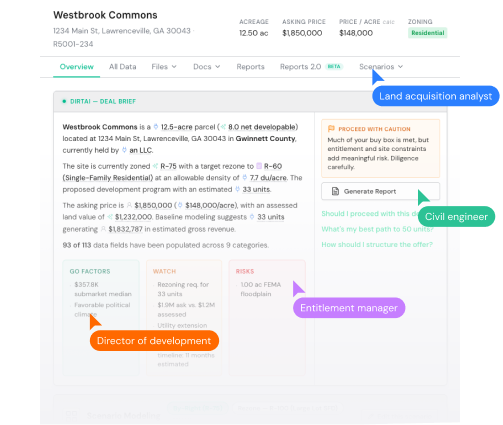
Dirt goes deep in every market we cover, reading local zoning codes, environmental layers, rezoning history, and municipal patterns so your team gets site feasibility, rezoning insights, concept plans, and deal-ready materials without the manual work.
AI Site Feasibility
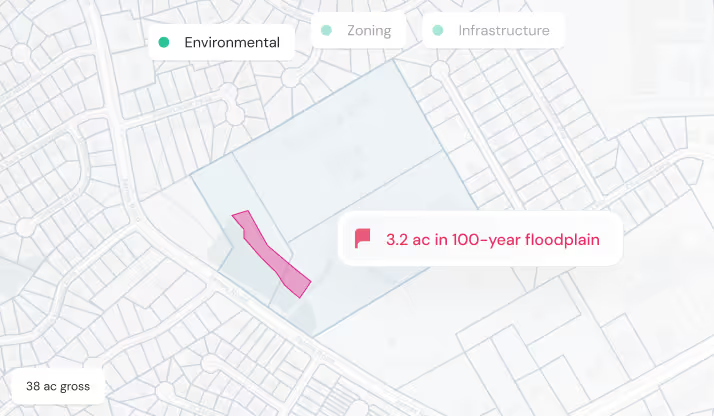
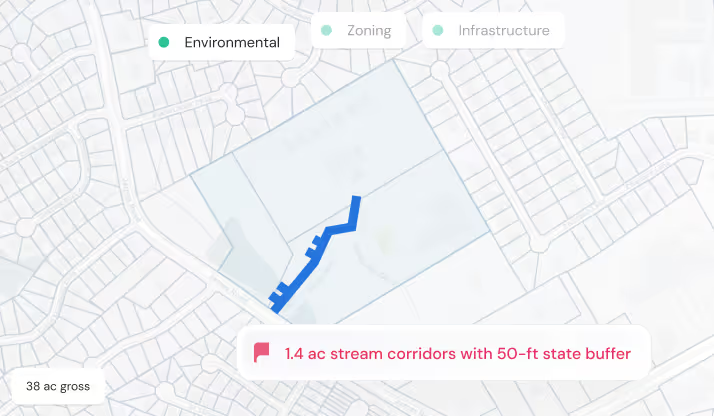
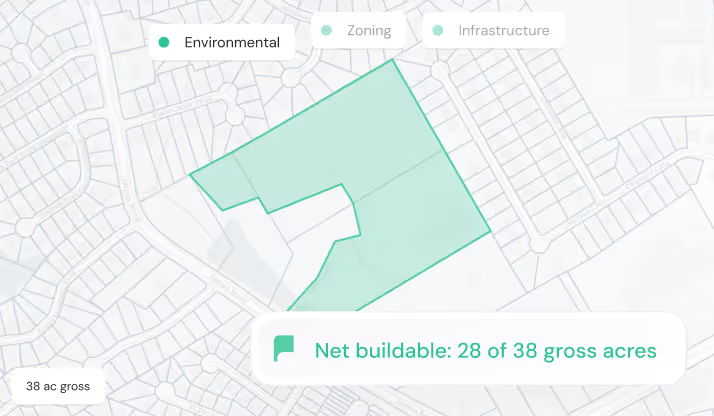
Environmental
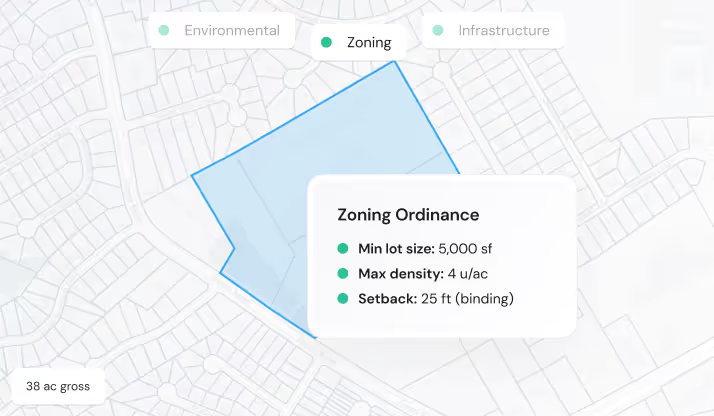
Zoning
Infrastructure
Environmental
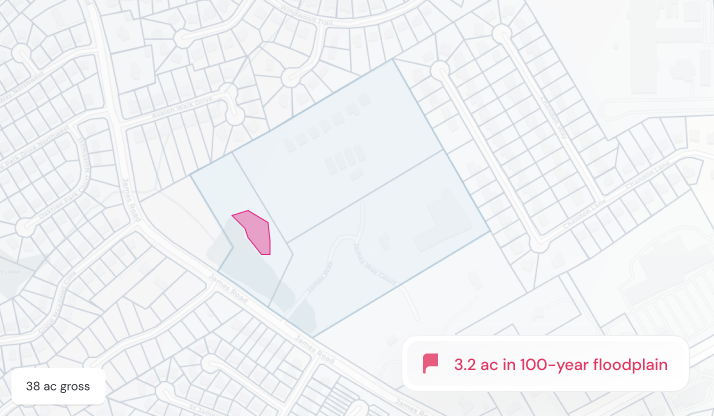
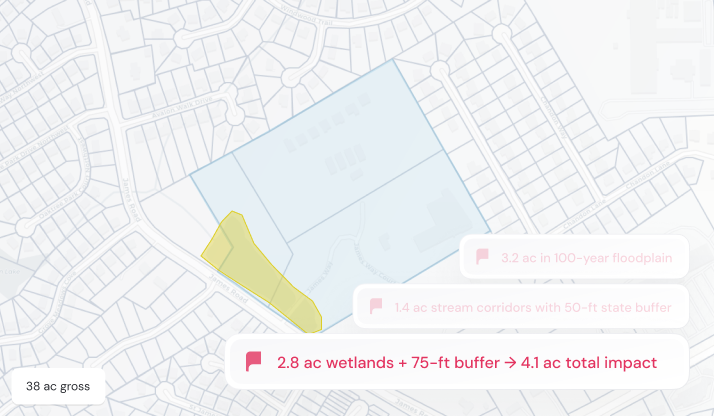
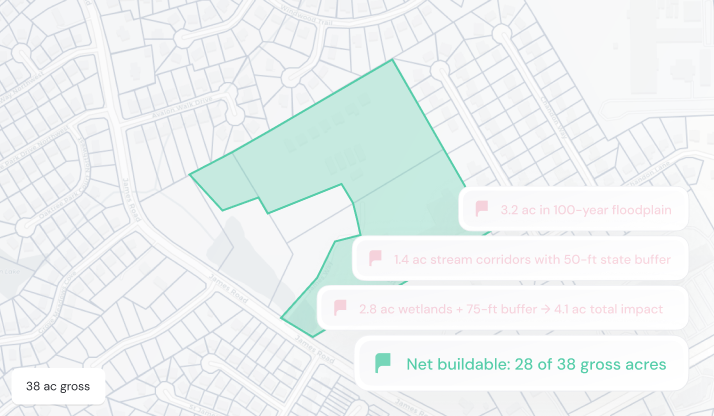
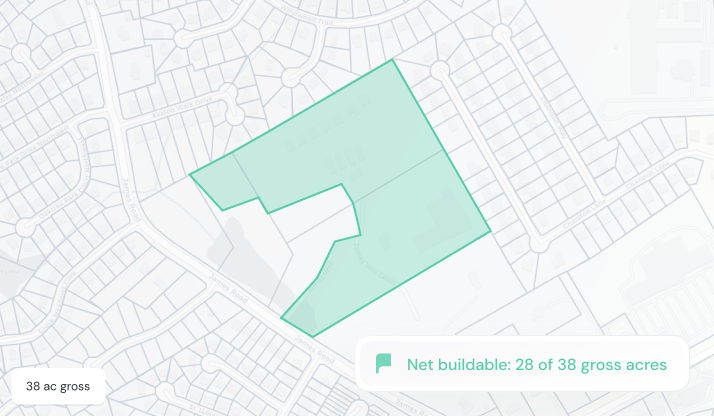
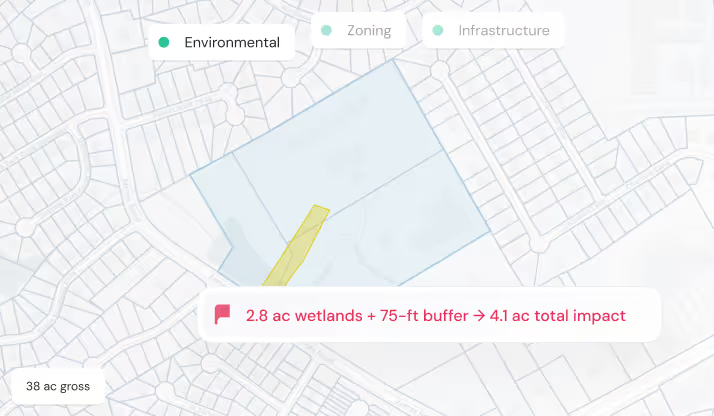
Maps wetlands, flood zones, streams, and slopes, calculating net buildable area and recalculating instantly when inputs change.
Zoning
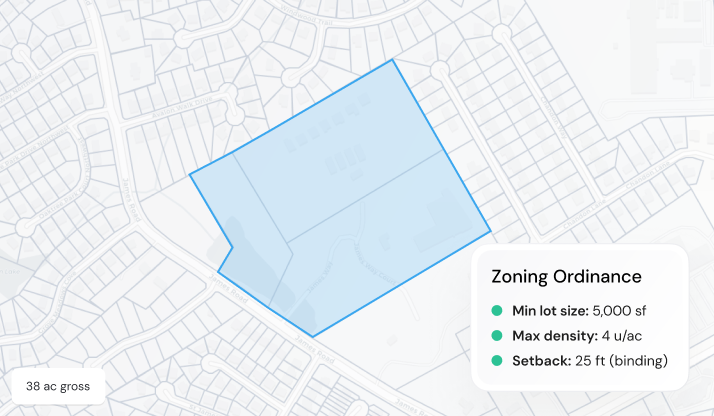
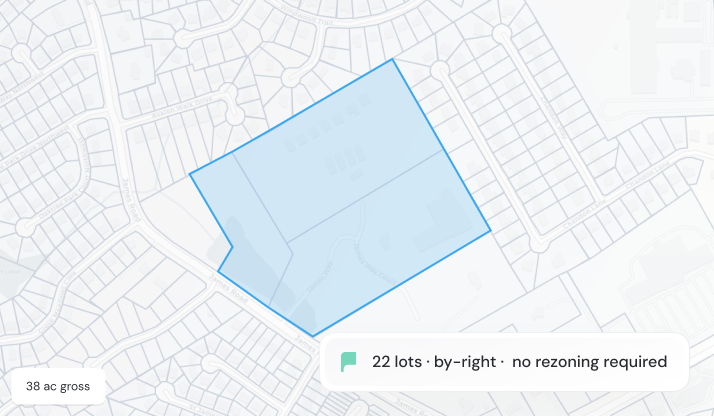
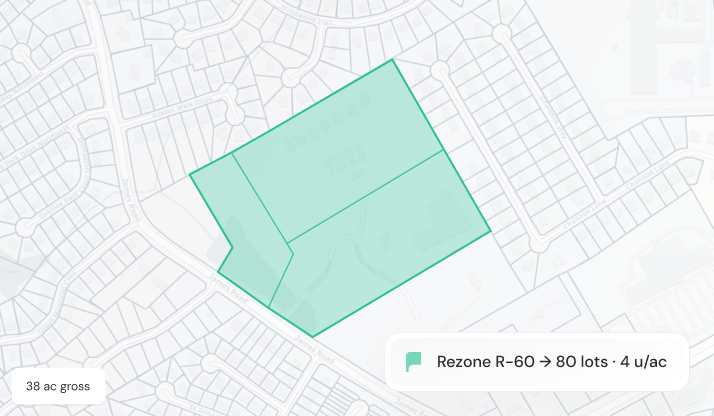
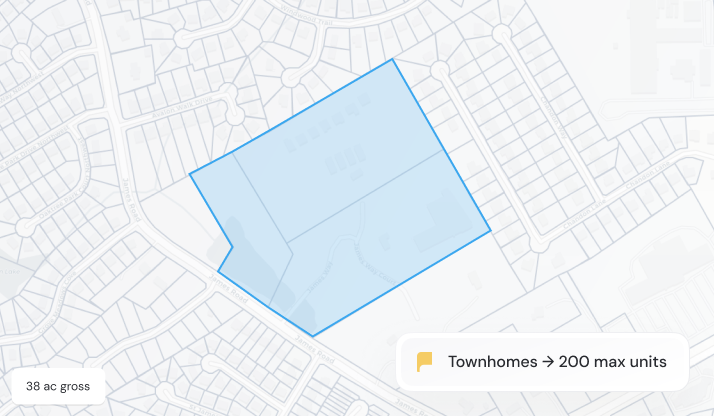
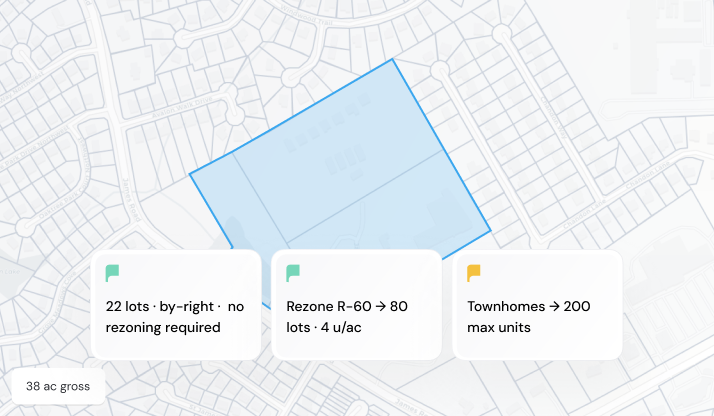
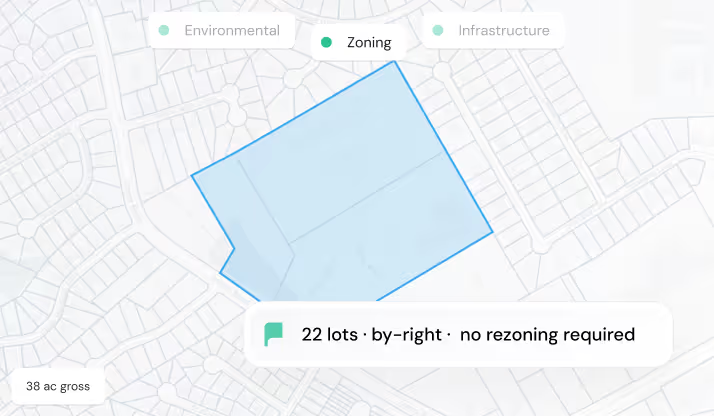
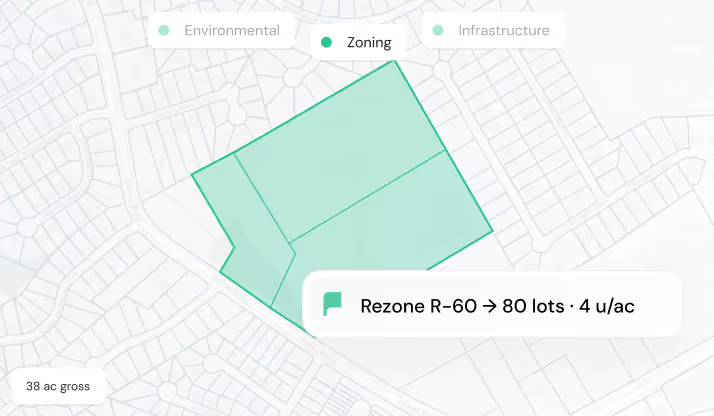
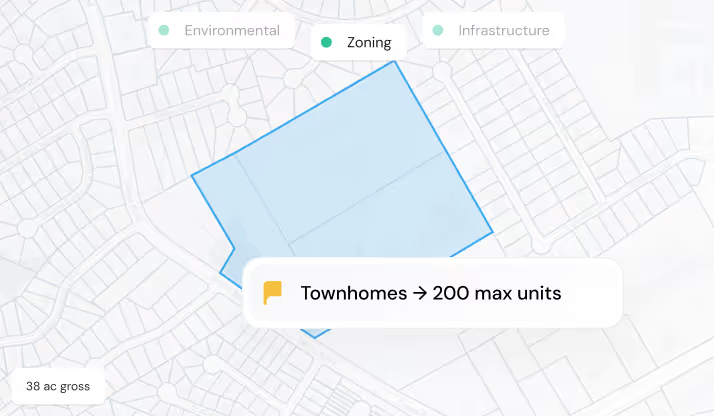
Extracts residential zoning options from local ordinances and compares unit yield across rezoning scenarios side by side.
Infrastructure
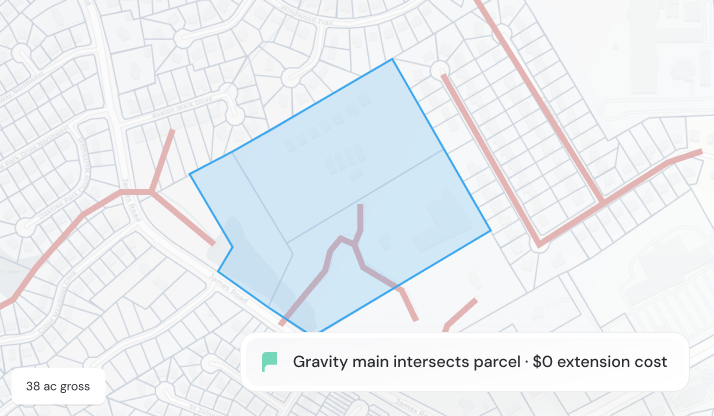
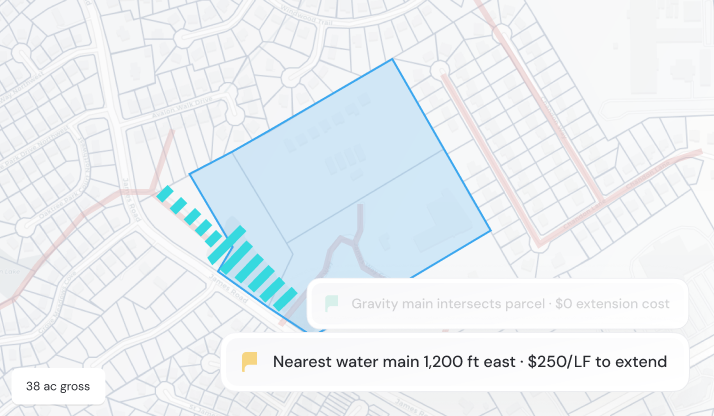
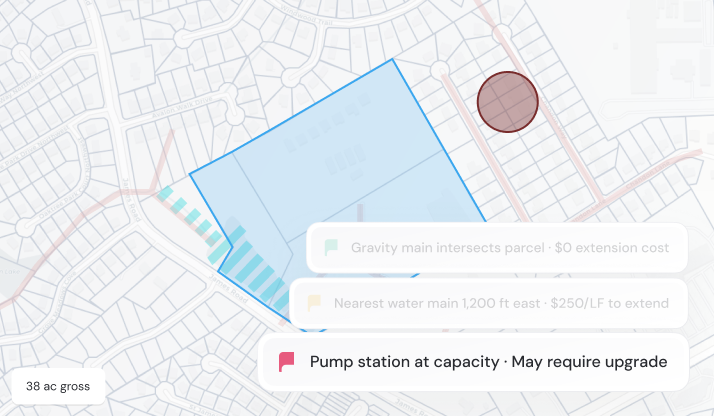
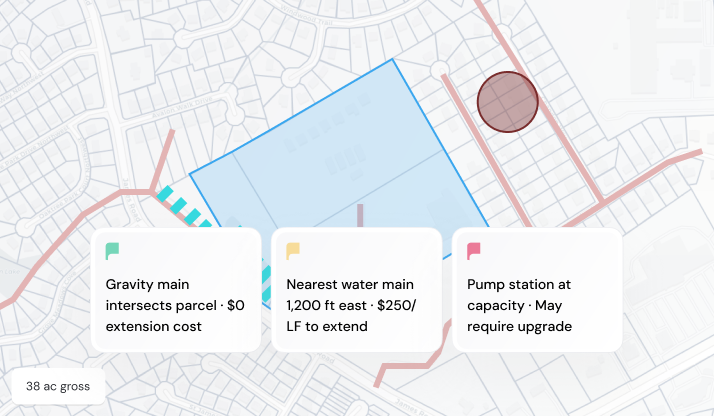
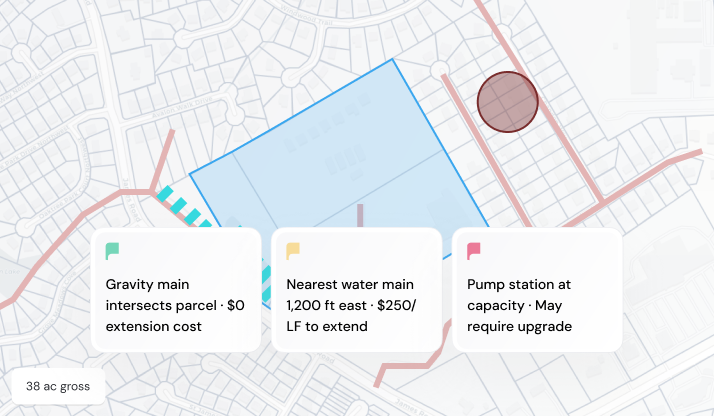
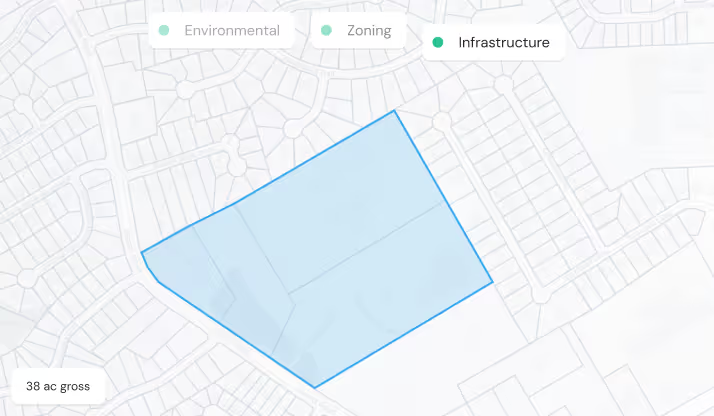
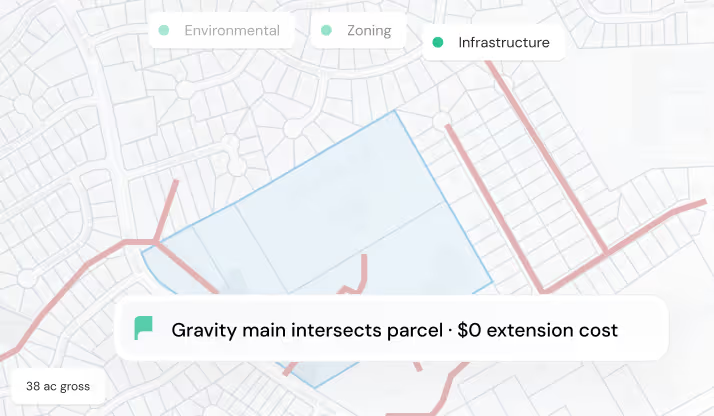
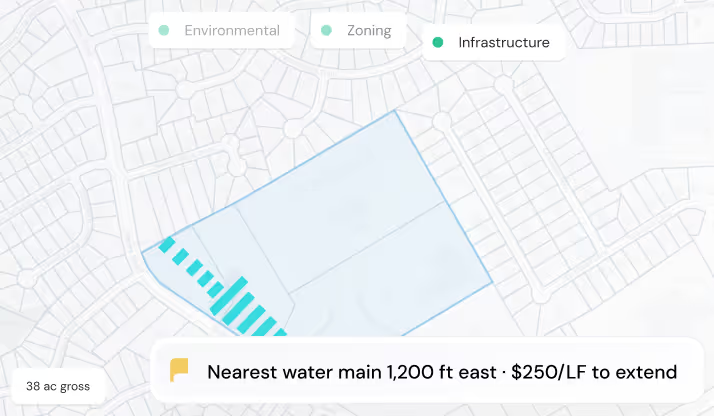
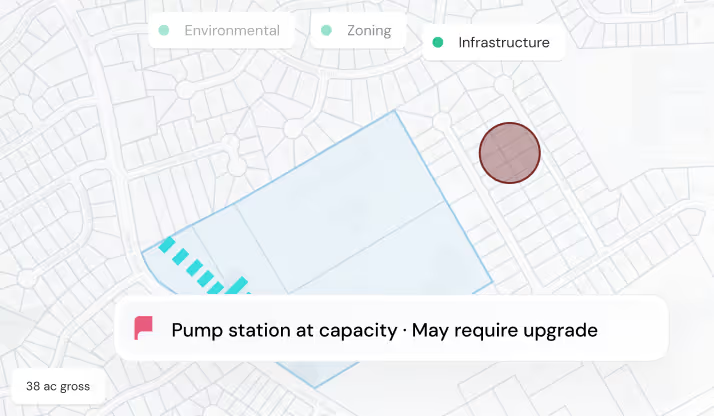
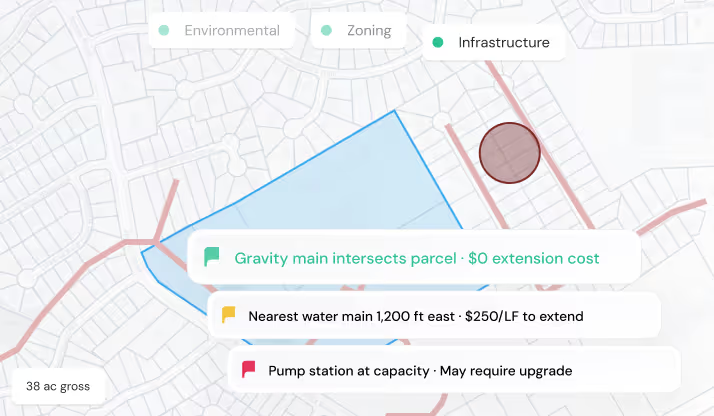
Maps sewer, water, and utility access, surfacing connection points and estimating off-site costs from geospatial data.
Dirt goes deep in every market we cover, reading local zoning codes, environmental layers, rezoning history, and municipal patterns so your team gets site feasibility, rezoning insights, concept plans, and deal-ready materials without the manual work.
AI Site Feasibility
Environmental
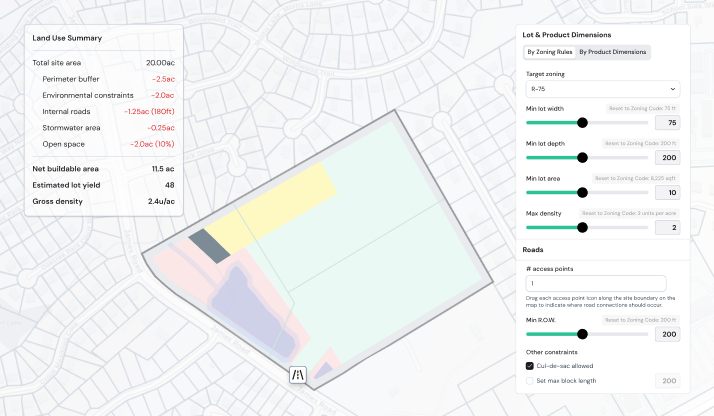
Identifies wetlands, flood zones, streams, and slopes, calculates net buildable area from your municipality's actual buffer requirements, and recalculates everything when you adjust an input.
Zoning
Extracts every residential zoning option from your municipality's ordinance, calculates unit yield for each, and compares rezoning scenarios side by side.
Infrastructure
Maps sewer, water, and utility access to the site — surfacing connection points, estimating off-site costs, and answering infrastructure questions directly from geospatial data.
Turns years of board votes, staff recommendations, and parcel-level precedent into a clear political-environment score, with the cited reasoning behind every call.
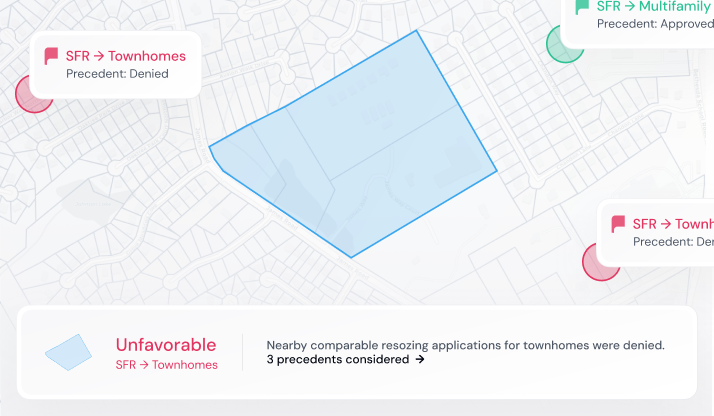
Parses years of rezoning hearings, board votes, and public comments to show what's been approved nearby, who influences decisions, and where opposition tends to surface.
Oops! Something went wrong while submitting the form.
What people are saying
John Bell
Development Partner
That is several weeks' worth of work right there. It blows me away.
Rahul Patel
VP, Acquisitions and Investments
Dirt helps us identify feasibility issues much earlier in the process, allowing us to pass faster on low-probability deals and meaningfully reduce pursuit costs.
Brandon Woods
Director of Entitlements and Zoning
Dirt allows us to confidently move from identifying an opportunity to submitting an LOI before the competition even opens the municipal code. It’s not just a time-saver; it’s a competitive advantage that profoundly changes our development process.
Nick Kouloheras
Senior Land Development Manager
Workflows that traditionally required months of effort are now being completed in a fraction of the time. Our team is making development decisions faster and with greater confidence.
Discover what you
could do with
Thank you! Your submission has been received!
Oops! Something went wrong while submitting the form.
Frequently asked questions
What is Dirt?
Dirt is the AI Land Development Platform that helps land developers to move faster on deals and get more deals done. It turns a raw parcel into a feasibility decision by analyzing zoning viability, environmental constraints, infrastructure proximity, municipal sentiment, and ownership context — all in one place. Instead of pulling data from scattered GIS tools, PDFs, and consultant calls, developers get a clear, defensible view of whether a site is worth pursuing, and the tools to move forward faster.
Who is Dirt for?
Dirt is built for land and real estate developers who acquire, entitle, and develop at scale. It's also useful for teams looking to expand outside of their existing markets who need to evaluate unfamiliar jurisdictions without years of local knowledge.
How is Dirt different from LandGlide, LandID, or other parcel tools?
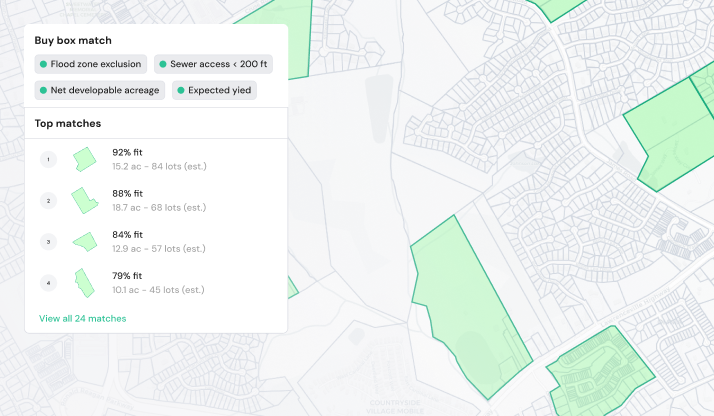
Point solutions give you layers — parcel data, flood maps, or zoning lookups — and leave you to evaluate the data and assemble the picture yourself. Dirt brings zoning, environmental, infrastructure, ownership, and municipal insights into a single AI-driven analysis tied to the specific parcel you're evaluating for your specific buy-box and risk criteria.
How accurate is Dirt's data?
Dirt pulls from authoritative public sources — county GIS portals, FEMA, USGS, state environmental databases, and municipal zoning codes — and cites every data point so you can verify the source. If a data layer is unavailable or incomplete for a given jurisdiction, we flag it rather than guess. Dirt gets you to a confident "fast no" or "worth deeper work" in minutes instead of weeks.
What geographies does Dirt cover?
Dirt is live across the Southeast U.S. today, with deep coverage in Georgia, Florida, and the Carolinas. We expand market by market based on customer demand and can typically onboard a new municipality within days. If your market isn't covered yet, let us know and we can prioritize it as part of your pilot.
Does Dirt replace my land use attorney or civil engineer?
No, and it's not meant to. Dirt replaces the 10–20 hours of manual research your team does before engaging those professionals — pulling zoning codes, checking FEMA maps, hunting for sewer capacity, reading meeting minutes. We compress that to minutes so you only spend consultant dollars on sites that actually warrant it.
Can AI really create concept plans?
Yes, Dirt can generate an early-stage concept plan that helps you quickly understand potential lot count, layout, and site viability. It is not meant to replace later civil engineering work, like detailed site plans, grading, infrastructure, or permit-ready drawings. In short: Dirt helps you decide whether a site is worth moving forward with before you spend time and money on full engineering work.
Can I export reports for my investment committee?
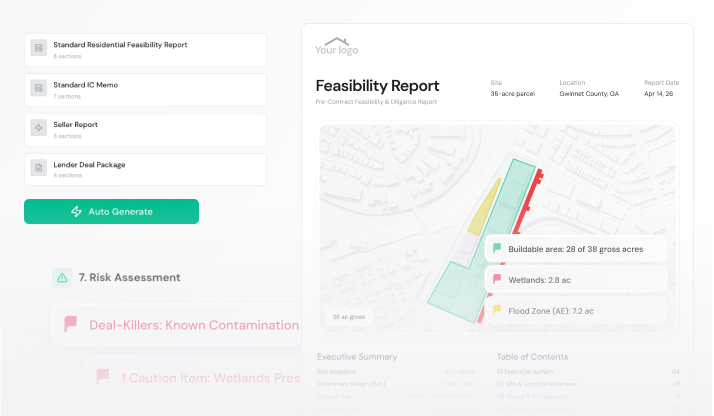
Yes. Dirt generates exportable feasibility reports you can share with your investment committee, lender, or seller. Reports include cited data sources, risk flags, and scenario comparisons — formatted for the same audiences that review your LOI packages today.
Is my data private? Can competitors see what I'm looking at?
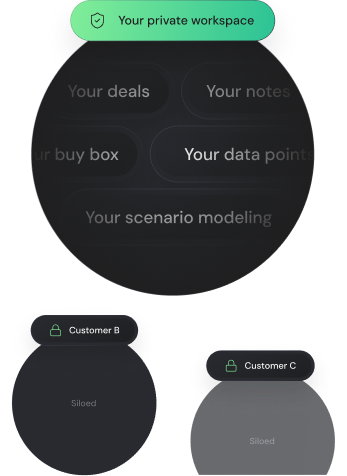
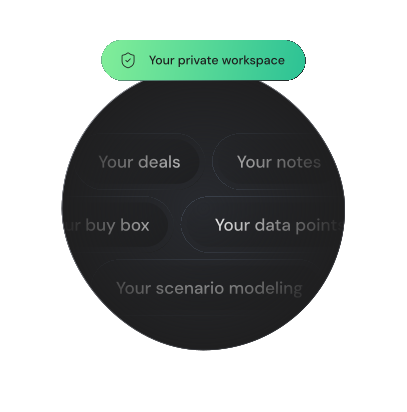
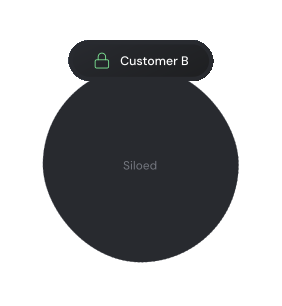
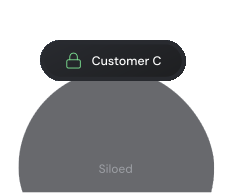
Your data is 100% private to your organization. We never share your deal pipeline, search activity, or analysis with other customers. Each account is fully siloed. Your competitors will never know which sites you're evaluating.
If all my competitors use Dirt, doesn't that eliminate my edge?
Dirt helps developers to move faster on deals and get more deals done aligned with their strategy, their edge. We don’t define that edge. Every developer has their own buy-box criteria, their own special sauce, and their own subjective lens to which they evaluate deals. Your edge is in how you put Dirt’s AI agents to work for your strategy. Dirt is customizable, allowing you to bring in your own data points, and customize scenario modeling to fit the way you work and assess opportunities.